Flowing Interwoven Line Pattern: A Comprehensive Evaluation
In the realm of digital design and craft creation, visual texture plays a pivotal role in defining the aesthetic quality of a project. Among the various stylistic elements available to designers, the Flowing Interwoven Line Pattern has emerged as a versatile and sophisticated choice. This pattern is characterized by continuous, overlapping curves that create a sense of movement and organic complexity without overwhelming the viewer. For professionals and hobbyists alike, understanding the specific attributes, applications, and technical specifications of this design element is crucial for making informed creative decisions.
This evaluation explores the utility of high-quality digital paper patterns featuring flowing interwoven lines. By examining the technical deliverables, potential use cases, and practical considerations, readers can determine whether this specific style aligns with their current project requirements and long-term design goals.
Understanding the Design Aesthetic
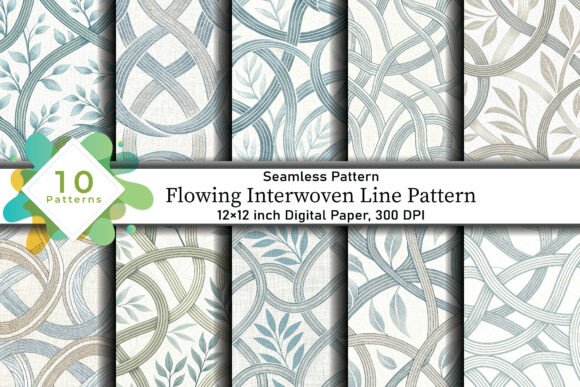
The term "flowing interwoven line pattern" describes a visual composition where linear elements cross over and under one another in a rhythmic, seamless manner. Unlike rigid geometric grids or chaotic abstract splashes, this style emphasizes fluidity and grace. The lines typically vary in thickness or opacity to create depth, resulting in a texture that feels both structured and natural.
When applied to digital papers, these patterns serve as foundational textures. They provide visual interest that can elevate simple layouts into more polished designs. The interwoven nature of the lines suggests connectivity and continuity, making it a popular choice for themes related to elegance, heritage, romance, or modern minimalism with a touch of intricacy.
Technical Specifications and File Formats
For any design professional, the technical integrity of assets is as important as their visual appeal. High-quality digital paper collections designed for the Flowing Interwoven Line Pattern typically adhere to strict industry standards to ensure versatility across different platforms.
- Resolution: Files are generally provided at 300 DPI (dots per inch). This resolution is the gold standard for print media, ensuring that text and graphics overlaid on the pattern remain sharp and legible, even when printed at larger sizes.
- Dimensions: The standard size for these digital papers is often 12 x 12 inches (3600 x 3600 pixels). This dimension is particularly advantageous for scrapbooking, as it matches the physical dimensions of standard scrapbook paper, allowing for easy scaling and printing without distortion.
- File Formats: To accommodate diverse software workflows, these patterns are usually available in both PNG and JPG formats.
- PNG Files: These are ideal for digital projects where layering is required. While some sets offer transparent backgrounds, others provide solid backgrounds to prevent underlying layers from showing through unexpectedly.
- JPG Files: These compressed format files are universally compatible and perfect for web backgrounds, email headers, or direct printing where file size optimization is necessary.
- Watermark-Free: Professional-grade assets are delivered without watermarks, ensuring that the final output is clean and ready for commercial or personal distribution.
Primary Applications and Use Cases
The adaptability of the flowing interwoven line pattern makes it suitable for a wide array of creative endeavors. Below are the most common scenarios where this asset proves valuable.
Scrapbooking and Journaling
For scrapbookers, texture is key to storytelling. A background with subtle interwoven lines adds depth to photo layouts without distracting from the primary subject matter. It works exceptionally well as a base layer for journaling cards, providing a sophisticated backdrop for handwritten notes or typed entries.
Stationery and Greeting Cards
In the stationery market, elegance is paramount. The organic flow of interwoven lines conveys a sense of luxury and care. Whether designing wedding invitations, birthday cards, or thank-you notes, this pattern adds a tactile feel to digital proofs and a refined look to printed products.
Print-on-Demand and Textile Design
Artists utilizing print-on-demand services often seek patterns that translate well to fabric, wrapping paper, and home decor. Because the pattern is seamless, it can be tiled infinitely, making it ideal for surface pattern design. The 300 DPI resolution ensures that details remain crisp when scaled up for large-format prints like wall art or fabric rolls.
Digital Collages and Social Media Graphics
Digital creators frequently use these papers as overlays or backgrounds for social media posts. The high resolution allows for zooming in on specific sections of the pattern to create unique, cropped backgrounds that maintain clarity even on high-density mobile screens.
Evaluating Tradeoffs and Considerations
While the Flowing Interwoven Line Pattern offers numerous benefits, it is essential to weigh these against potential limitations to ensure it fits your specific needs.
Visual Complexity vs. Readability
The primary tradeoff with intricate line patterns is readability. If the lines are too dense or high-contrast, they may compete with text or focal images. Designers must carefully balance the weight of the typography and the brightness of accompanying graphics against the background pattern. In many cases, using a semi-transparent overlay or desaturating the pattern slightly can mitigate this issue.
Color Palette Constraints
Interwoven line patterns often rely on monochromatic or analogous color schemes to maintain their elegant appearance. If a project requires bold, clashing colors, a simpler geometric pattern might be more effective. However, if the goal is subtlety and sophistication, the limited but harmonious palette of interwoven lines is a significant advantage.
Software Compatibility
While PNG and JPG are widely supported, users working in vector-based software (like Adobe Illustrator) may find raster images (PNG/JPG) less flexible than vector EPS or AI files. Scaling a raster image beyond its original dimensions can lead to pixelation. Therefore, it is crucial to purchase assets at the highest resolution possible—such as the 3600 x 3600 px standard—to allow for future scalability.
Decision-Making Insights
To determine if this collection of digital papers is the right choice, consider the following questions:
- What is the end medium? If you are printing physical goods like cards or scrapbooks, the 300 DPI resolution is non-negotiable. Ensure the provider guarantees print-ready quality.
- Do you need transparency? If your workflow involves complex layering in Photoshop or Procreate, verify if the PNG files include transparent backgrounds. If not, you may need to mask out the white background manually.
- Is the aesthetic appropriate? Assess your brand identity or project theme. Does it call for organic, flowing shapes? If your design language is strictly modern, brutalist, or tech-focused, a rigid grid or noise texture might be more appropriate.
Conclusion
The Flowing Interwoven Line Pattern represents a robust tool in the digital designer’s arsenal. Its combination of aesthetic elegance and technical reliability makes it a strong candidate for projects ranging from intimate handmade crafts to commercial print-on-demand products. By understanding the technical specifications—such as the 12x12 inch, 300 DPI standard—and recognizing the importance of balancing visual complexity with readability, creators can leverage these patterns to enhance the perceived value of their work.
Whether you are a seasoned graphic designer looking to add texture to a client’s branding package or a hobbyist crafting a personalized gift, a high-quality set of interwoven line patterns offers flexibility, professionalism, and timeless appeal. Evaluating your specific project constraints against the features outlined above will help you make a confident decision that supports your creative vision.