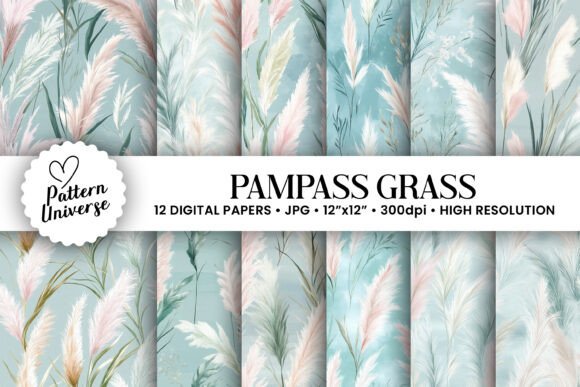
Pampas Grass Pattern Digital Papers
In the modern digital design landscape, efficiency and aesthetic consistency are paramount. Whether you are a small business owner launching a boutique brand, a scrapbook enthusiast documenting life’s milestones, or a marketer crafting social media assets, the quality of your background textures can make or break the visual hierarchy of a project. This is where specialized assets like Pampas Grass Pattern Digital Papers become indispensable tools in your creative workflow. These are not merely decorative images; they are structured, high-resolution seamless patterns designed to integrate seamlessly into various production pipelines.
The specific collection described here—featuring 12 distinct AI-generated designs—offers a versatile solution for creators who need professional-grade textures without the time investment of custom illustration. By understanding how these files function within broader design processes, you can streamline your output, maintain brand coherence, and elevate the perceived value of your final products. This article breaks down the practical application of these digital papers, focusing on integration, technical specifications, and strategic use cases across different industries.
Understanding the Asset: Technical Specifications and Workflow Integration
Before diving into specific applications, it is crucial to understand the technical foundation of these assets. The package includes 12 unique digital papers contained within a single zip file. Each pattern is provided in high-resolution 300dpi (dots per inch) with dimensions of 3600 x 3600 pixels, which equates to a physical size of 12″ x 12″ at print resolution. These specifications are not arbitrary; they are industry standards that dictate how the asset behaves during both digital and physical production phases.
Resolution and Scalability
The 300dpi resolution ensures that when these patterns are used in print-on-demand services, such as those for greeting cards or wall art, the result is crisp and free from pixelation. For digital use, this high resolution allows for flexibility. You can crop, scale, or layer these patterns without losing quality. In a typical workflow, you might import a 12x12 pattern into Adobe Photoshop or Illustrator to create a larger canvas. Because the source file is 3600 pixels wide, you have ample room to manipulate the texture before exporting it for web use or large-format printing.
Seamless Tiling Capability
A critical feature of these digital papers is their "seamless" nature. This means the edges of the pattern align perfectly with itself when tiled. This property is essential for creating backgrounds that cover entire surfaces, such as the body of a tumbler, a full-page journal layout, or a website hero section. Without seamless capability, you would face repetitive visible seams that disrupt the visual flow, requiring manual editing to hide joints—a time-consuming process that reduces overall productivity.
Strategic Use Cases Across Creative Industries
The versatility of Pampas Grass Pattern Digital Papers allows them to fit into multiple verticals. Below, we explore how these assets interact with common workflows in gift wrapping, stationery design, and sublimation crafts.
1. Print-on-Demand and E-Commerce Assets
For entrepreneurs selling on platforms like Etsy or Amazon KDP, speed to market is a competitive advantage. Using pre-made, high-quality digital papers accelerates the prototyping phase. Instead of designing a background from scratch, you can apply a pampas grass pattern to a mockup template. This allows you to test color palettes and thematic consistency rapidly. For example, if you are launching a line of wedding invitations, you can pair these neutral, earthy tones with elegant typography overlays. The seamless nature of the paper ensures that even if you resize the invitation card, the background remains consistent and professional.
2. Sublimation and Physical Product Manufacturing
Sublimation printing requires precise file preparation. When designing for tumblers, mugs, or tote bags, the artwork must wrap around the object without distortion. The 12x12 dimension of these files serves as an excellent base tile. You can duplicate and arrange these tiles in your design software to match the circumference of your chosen blank product. The high contrast and detail inherent in AI-generated patterns often translate well to fabric and ceramic surfaces, providing a textured look that mimics natural materials without the cost of sourcing actual dried flora.
3. Digital Planning and Junk Journaling
In the realm of digital planning, users often create virtual journals using apps like GoodNotes or Notability. Pampas Grass Pattern Digital Papers serve as perfect page backgrounds or element overlays. The neutral beige and brown tones characteristic of pampas grass provide a calming backdrop that does not compete with handwritten notes or photos. For junk journalers, these patterns offer a cohesive theme for mixed-media projects, allowing for easy coordination between printed elements and digital layouts.
Implementation Tips for Efficiency and Quality Control
Integrating these assets into your workflow requires more than just downloading the zip file. To maximize utility and ensure long-term usability, consider the following implementation strategies.
- File Organization: Upon unzipping the file, immediately organize the 12 patterns into a dedicated folder structure. Label them clearly (e.g., "Pampas_Pattern_01.jpg") to facilitate quick retrieval during busy design sessions. A disorganized asset library leads to wasted time searching for the right texture.
- Color Adaptation: While pampas grass typically features neutral tones, you may need to adjust hues to match a specific brand palette. Use adjustment layers in your editing software to shift the saturation or brightness. This technique allows you to reuse the same pattern across different campaigns, extending the lifecycle of the asset.
- Layering Techniques: To add depth, combine the pampas grass pattern with other textures, such as linen or paper grain overlays. Set the blending mode to "Overlay" or "Soft Light" at a low opacity (10-20%). This adds tactile realism to digital designs, making them appear more sophisticated and less flat.
- Consistency Checks: Always preview your work at 100% zoom before exporting. Check for any awkward cropping at the edges of your final composition. If you are using the pattern for a repeating background, verify that the seamlessness holds true after any transformations or filters are applied.
Compatibility and Software Considerations
These digital papers are generally provided in standard image formats compatible with almost all design software. Whether you are using industry-standard tools like Adobe Creative Cloud, Affinity Designer, or free alternatives like GIMP and Canva, the files will integrate smoothly. However, be mindful of the software's handling of large files. Opening a 3600x3600 pixel image in a resource-constrained environment may require sufficient RAM. For web-based platforms, you may need to export a compressed version for display while keeping the original high-res file for print purposes.
Furthermore, consider the end-use medium. If you are printing directly from your computer, ensure your printer driver supports high-resolution image processing. Some home printers may struggle with the density of certain digital patterns, resulting in banding or color shifts. Test printing a small section first to calibrate your settings before committing to a full batch of prints.
Long-Term Value and Scalability
Investing in a pack of 12 Pampas Grass Pattern Digital Papers offers significant long-term value. Unlike seasonal trends that fade quickly, neutral botanical themes remain relevant across years. They can be repurposed for holiday designs by adding festive accents, or used in everyday business communications to convey warmth and professionalism. The AI-generated aspect also implies a level of uniqueness; these patterns are likely distinct enough to avoid the overused stock photo look, giving your work a bespoke feel.
By treating these digital papers as foundational building blocks rather than one-off decorations, you can build a robust library of reusable assets. This approach reduces decision fatigue and accelerates the creative process. As you accumulate more such resources, you develop a personal style guide that ensures consistency across all your outputs, whether they are physical gifts, digital invitations, or commercial branding materials.
Ultimately, the goal of integrating Pampas Grass Pattern Digital Papers into your workflow is to remove friction from the creative process. By having high-quality, ready-to-use textures at your disposal, you can focus more on the core message and less on the mechanics of background creation. This shift in focus allows for greater creativity and higher quality outcomes, benefiting both the creator and the end consumer. Thank you for considering these assets as part of your next project, and we hope they serve as a valuable addition to your digital toolkit.